
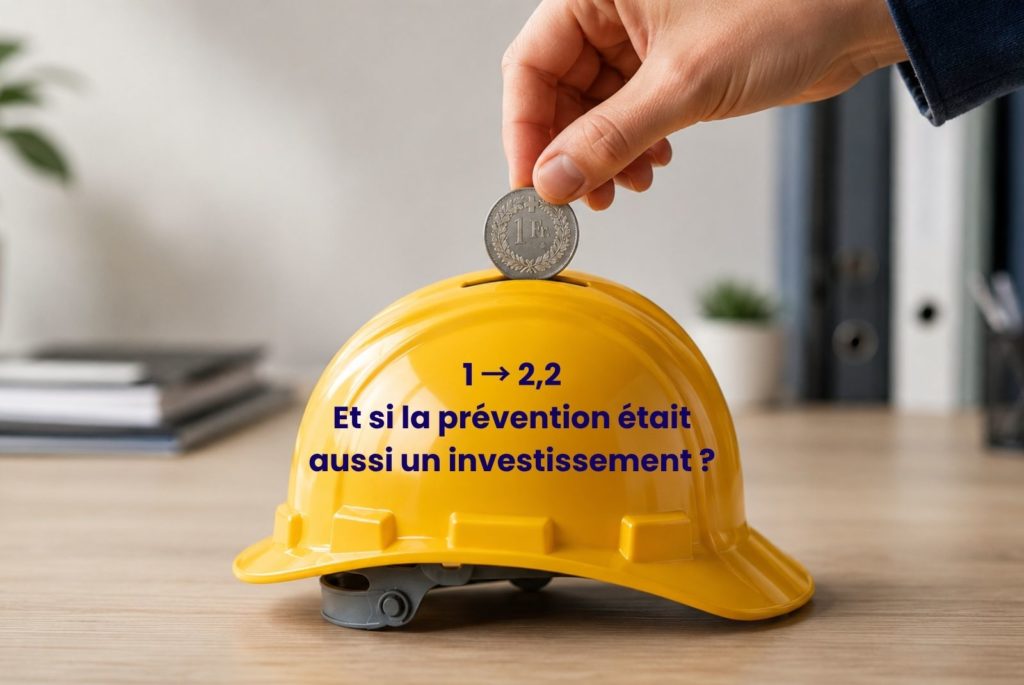
Invest 1 to potentially get 2.2 in return.
Put like that, the investment seems rather attractive.
And yet, it is neither a financial investment, nor a property investment, nor a new technology.
This is occupational health and safety prevention.
An international study of 300 companies in 15 countries, including Switzerland, estimated the average return on prevention at 2,2. In other words, according to the estimates gathered, every monetary unit invested in prevention could generate a potential return of 2.2 units per employee per year.
But please note: investing 1 CHF does not automatically mean you will receive 2.20 CHF.

And that is precisely where the study gets interesting.
Because to understand this figure, you need to look at where the return on investment from prevention actually comes from.
2.2: what this figure tells us… and what it doesn’t
Let’s start by avoiding a tempting shortcut.
The study, published in 2011 by the’International Social Security Association (ISSA), is based on interviews with prevention experts within the participating organisations. The authors themselves point out that this is assessments and estimates, that the results are not representative of a single company and should not be over-interpreted.
The famous 2.2 is therefore an average figure from the study, not a guarantee of return.
However, the sample is still substantial: 300 companies from 15 countries took part, including Switzerland, Germany, Sweden, Canada, the United States and Australia.
Above all, the results enable us to ask a far more useful question:
When a company invests in prevention, where does it see the benefits?
Not just in accidents that never happened
That’s probably the first benefit that springs to mind.
An accident avoided means not only potential suffering avoided, but also no disruption, no absence from work and various costs that will not have to be borne. On a building site, for example, the reporting a near-miss can help turn a risky situation into a preventative measure.
However, the ISSA study reveals a much broader perspective.
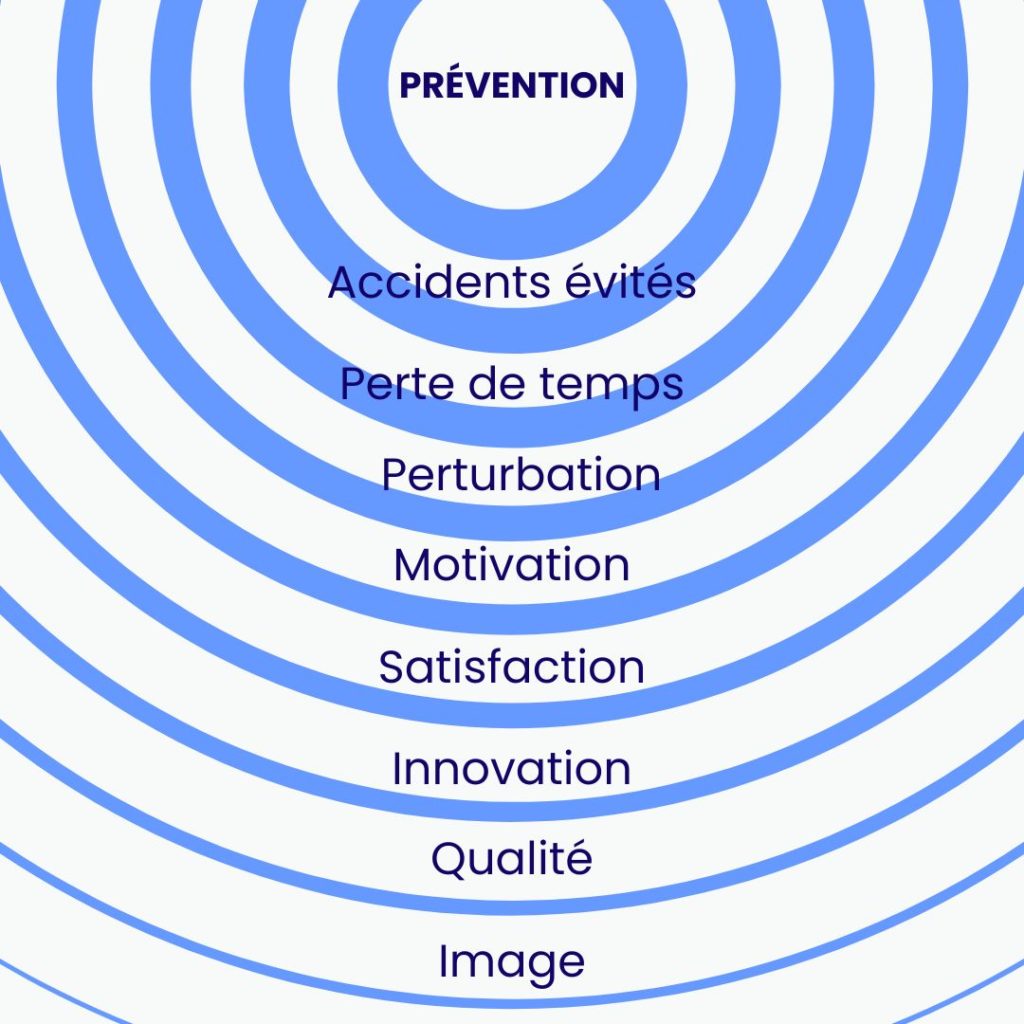
The companies surveyed also associate prevention with effects on disruptions to work, wasted time, staff motivation and satisfaction, quality, innovation and the company’s reputation.
The costs we can see… and those we overlook
Protective equipment comes at a price.
Training comes at a cost.
The time spent analysing risks comes at a cost.
These expenses appear somewhere and are relatively easy to identify.
On the other hand, how much does it cost:
- Production halted for two hours?
- An experienced member of staff is absent?
- A team that needs to reorganise its operations as a matter of urgency?
- a delay that will then have to be made up for?
- a non-conformity caused by a degraded situation?
- Or simply dozens of minor disruptions that take up time without ever appearing under a heading such as «cost of failing to take preventative action»?
This is where the economic reasoning becomes interesting.
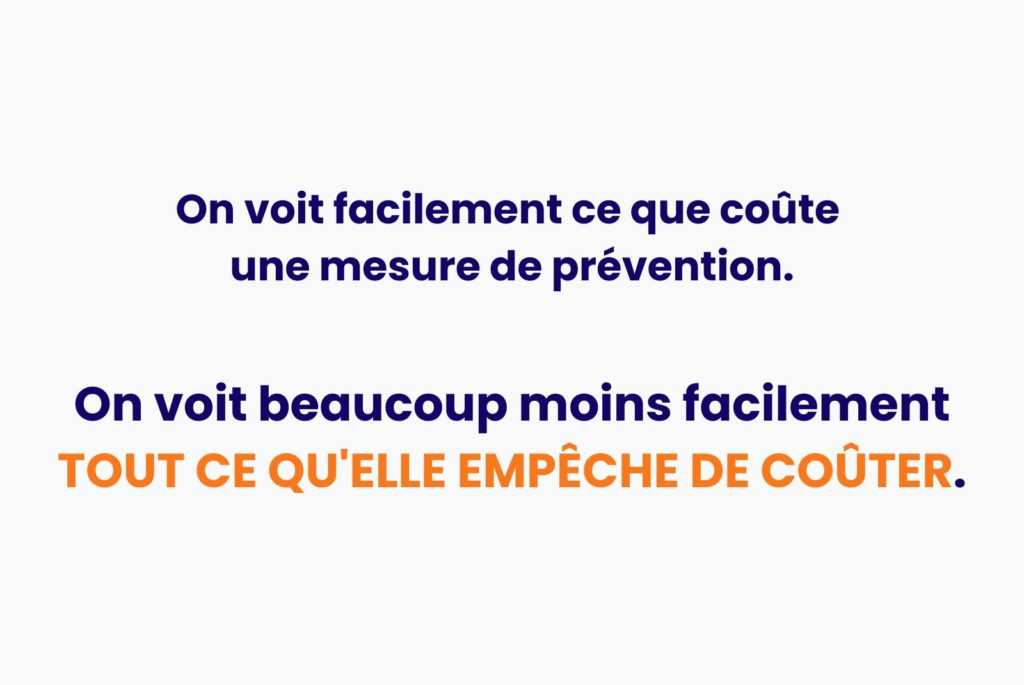
The cost of prevention is clear to see.
The cost of failing to take preventive action is often spread out.
That is also what makes risk identification and management Key points: before deciding where to invest, you first need to know which risks really warrant your attention.
50 %: another figure deserves our attention
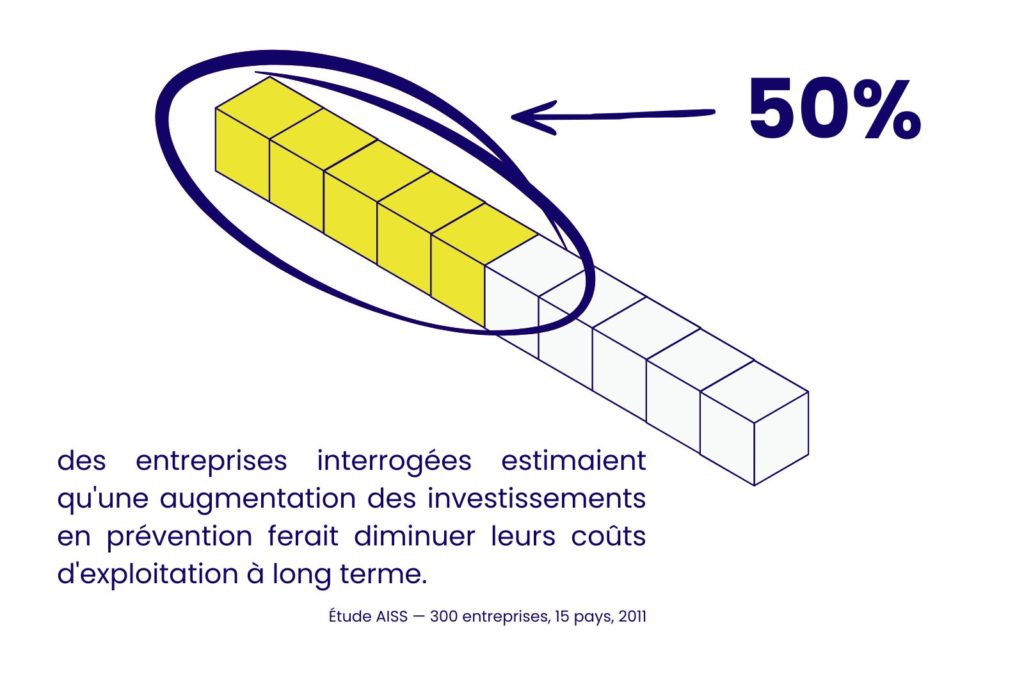
2.2 is not the only interesting finding from the study.
When the companies surveyed were asked about the impact of increased investment in health and safety at work on their long-term operating costs, 50 % believed that these would decrease.
25 % thought they would remain the same and 24 % thought they would increase.
This finding obviously does not mean that increasing any form of preventative expenditure will automatically reduce costs.
However, he does suggest something important:
Prevention can be seen as a driver of performance, rather than merely a necessary expense to ensure compliance.
But investing more isn’t necessarily the right question
The ratio of 2.2 provides a rough guide, not the answer to the question: where should you prioritise investment within your own organisation? To answer that, you need to look at your risks: which are the most critical, what consequences might they have, and what measures could be taken to reduce them?
To say that prevention can create value might lead to a conclusion that is a little too simplistic:
Prevention pays off, so let’s spend more.
But the real question is rather:
«Are we investing where it actually creates value?»
What are the key risks?
What measures have been agreed?
Which of these have actually been implemented?
Who is responsible for this?
Are the measures having the intended effect?
Have any new risks emerged?
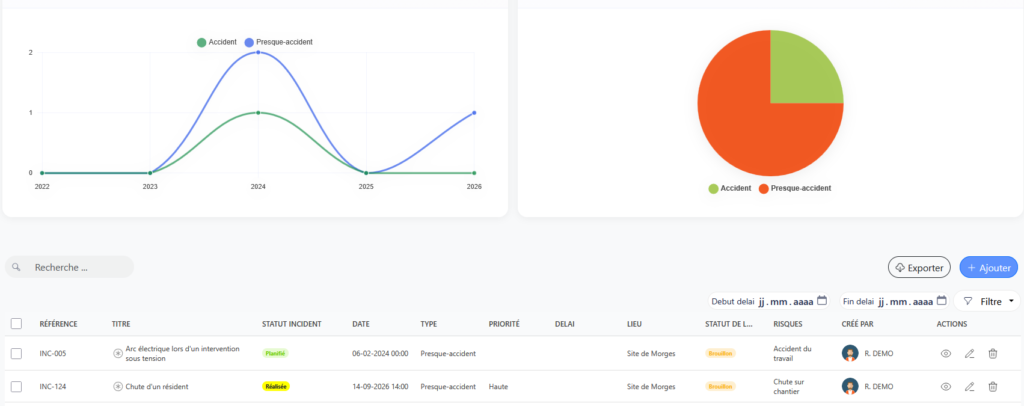
This is where a safety management system really comes into its own.
Prevention becomes manageable when we can link risks, measures, responsibilities, controls and their monitoring.
What if the ROI of security were just as much about people?
There is, after all, something that the ratio of 2.2 does not adequately convey.
The study itself begins by pointing this out: occupational health and safety programmes are primarily designed to prevent accidents and work-related illnesses, the impact of which on quality of life cannot simply be compensated for financially.
That’s important.
For demonstrating that prevention can be economically beneficial does not mean that Profitability is the reason why we must protect people.
Safety is, first and foremost, a matter of personal responsibility and the employer’s obligations.
But if it can, in addition, help to minimise disruption, save time and support the organisation’s quality, motivation and performance, then the contrast between:

«security»
and
«performance»
may well be worth questioning.
Return on investment in prevention: what can we learn from the 1:2.2 ratio?
No, the ISSA study does not allow us to conclude that Every franc invested in security will generate CHF 2.20 for your business.
It is an old study; its findings are based in part on estimates, and its authors explicitly ask that they not be over-interpreted.
But his findings still offer valuable insights that are well worth considering:
Prevention is not just a cost incurred to avoid accidents. It can also create value for the organisation.
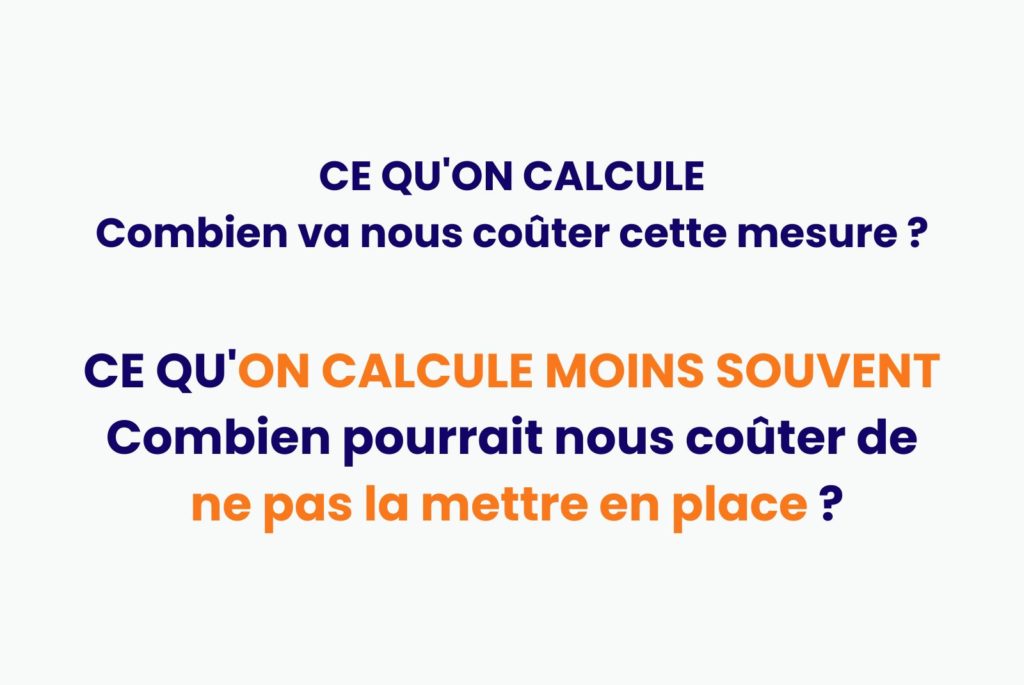
And perhaps the question to ask during the next budgetary decision-making process is therefore not just:
«How much will this preventative measure cost us?»
But also:
«How much might it cost us not to implement it?»
Further reading
The study Return on prevention: calculating the cost-benefit ratio of investment in health and safety at work was published in 2011 by the International Social Security Association (ISSA). The INRS also references it on its documentation portal.